Ancient Egyptian Facts .com
Ancient Egypt Facts for Kids,History,Daily Life,Mummies


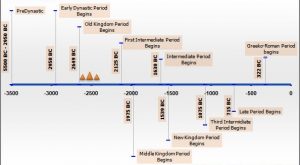
Pre- dynastic Early Dynastic (c.3050–2686 BC) Old Kingdom (2686–2181 BC) First Intermediate (2181 -1991 BC) Middle Kingdom (2134–1690 BC) Second Intermediate (1674–1549 BC) New Kingdom (1549–1069 BC) Third Intermediate (1069–653 BC) Late Period (672–332 BC) Ptolemaic

Roman


Home Ancient Egypt
Egyptian Canopic Jars
Interesting Facts
Nile River Importance
Physical Features
Ancient Egypt Timeline
Ancient Egypt Afterlife
Egyptian Amulets
Ancient Egypt Animals
Egyptian Architecture
Ancient Egypt Artifacts
Ancient Egypt Artwork
Egyptian Astronomy
Ancient Egyptian Boats
Ancient Egyptian Bread
Ancient Egypt Calendar
Ancient Egyptian Cats
Ancient Egyptian Cities
Ancient Egypt Climate
Ancient Egypt Clothing
Ancient Egypt Costumes
Ancient Egypt Culture1
Egyptian Culture2
Ancient Egypt Culture3
Ancient Egypt Currency
Ancient Egyptian Curses
Ancient Egypt Customs
Ancient Egypt Daily Life
Ancient Egyptian Deities
Ancient Egyptian Diet
Ancient Egypt Economy
Ancient Egypt Education
Egyptian Engineering 1
Egyptian Engineering 2
Ancient Egyptian Facts
Ancient Egypt Farming
Ancient Egyptian Gods1
Ancient Egyptian Gods2
Ancient Egyptian Gods3
Egyptian Government
Egyptian Headress
Egyptian Hieroglyphics
Ancient Egypt Homes
Ancient Egypt Houses
Egyptian Inventions 1
Egyptian Inventions 2
Egyptian Irrigation
Egyptian Jewellery
Ancient Egyptian Jobs
Ancient Egyptian Kids
Egyptian Language
Egyptian Legal System
Ancient Egypt Location
Ancient Egyptian Luxor
Ancient Egypt Marriages
Ancient Egyptian Masks
Ancient Egyptian Maths
Egyptian Medicines
Ancient Egypt Military
New Articles
New Articles2
New Articles3
 

Ancient Egyptian Facts

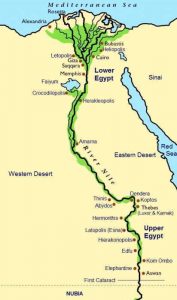
Egypt is one of the countries in Africa and the Middle East. The ancient name for Egypt is Kemet meaning 'black land'. It had obtained its name owing to the fertile black soil found on the plains of the Nile river which flows through Egypt. Egypt is also known for its historical monuments like the Giza pyramid complex and even the Egyptian civilization holds a lot of importance.

Egypt is a country which has political and cultural significance for the Middle East. Egypt derived its English name from various sources like the French word Egypte, from Latin Aegyptus and ancient Greek Aigyptos. Facts include farming, paintings, education, religious beliefs and other things that related to and explained the Egyptian lifestyle.

Farming in Egypt

One of the fundamental reasons that attributed Egypt to flourish was the fertile black soil along the Nile river which flowed through Egypt. Farming was a significant activity carried on by the ancient Egyptians. During that time, many farmers were experts in cultivating wheat, vegetables, a variety of fruits and onions.

Other items of farming included barley, flax, leeks, garlic, beans, grapes, figs etc. Wheat was used for making bread, barley for beer and Flax was integral for textile fiber. Papyrus reeds which grew naturally on Nile river were used making sandals, boats, paper, mats and baskets. Farming was carried out in all the seasons, except when it flooded. During floods people avoided farming.

Animals like goat, cattle oxen, pigs, ducks, etc were kept by the Egyptian people for their milk, meat and using them in farming. In the ancient Egypt irrigation was classified into catch basin, shaduf and dykes. Shaduf was functional in the high lying regions. The different types of irrigation helped in amplifying both the quality and quantity of crops thus making Egypt a prosperous nation.

Paintings in Egypt

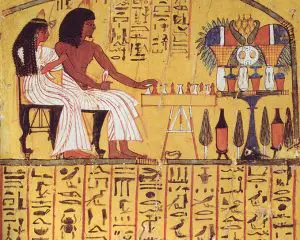
The Egyptian paintings were basically dedicated to a dead person. Paintings were a way of expressing the intention of its maker that the deceased should have a good life after death. Many paintings show the whole journey after death. Also, there was a practice of painting on the tombs the things the dead person did before his death and what the deceased hoped he would keep doing forever.

Paintings were a source of keeping the history alive. The paintings also showed how the Egyptians lived their life and their belief about death and life after death was. Another important aspect of the Egyptian paintings was the depiction of animals. The primary colors used for painting were red, green, blue, gold and black.

The Egyptians considered painting as a way of providing the dead a support which enabled him to carry on his journey after death. The essence of the Egyptian paintings was its complete nature and less importance was given to the beautification of the painting. It was very essential for the maker of the painting to conserve everything he drew permanently. The painting was made by its maker by using his memory so that everything he includes in the paintings remains intact forever.

Costumes worn in Egypt

Clothes were primarily made from white linen. The Egyptian people also used wool. However, clothes made from wool were prohibited in the temples as they were made from animals. Egyptian people believed that wool should not touch the skin and so was made in that fashion. Men wore loincloths or short skirts. Women generally wore robes or tight dresses. Some of the dresses had some straps which concealed the breasts and the others exposed them.

However much depended on the fashion that was prevalent then. Children during the Egyptian time did not wear clothes until they reach adolescence. The clothes fashion was simple in the initial years of the Egyptian rule but it became complex at the fag end of the New Kingdom. Clothes pattern was determined by the occupation of a person. Farmers wore short skirts while a poor person wore fewer clothes.

Egyptian Pharaohs

Pharaoh is a modern title given to ancient Egyptian rulers. However, the Kings were not referred to as Pharaoh by the ancient Egyptians. The term 'Pharaoh' was basically used by Greek and Hebrews. The word par'o in Hebrew referred to the word 'pr' in Egyptian language which meant 'the great house'. The term 'Pharaoh' was always used in relation to the Royal Palace and it meant for the life, prosperity and health of the palace.

From the fifteenth century BC Pharaoh was used as a synonym to King. However, the first use of the word 'pharaoh' can be traced to the New Kingdom during the middle of the eighteenth dynasty. After 2000 BC, Pharaoh was referred to by five names, four of them being his throne names and one was the name given to him at the time of his birth.

The late Egyptian word, the par'o word was reconstructed as per the Ancient Greek and Late Latin words pronounced as 'Pharaoh'. It was from this letter that the English word 'Pharaoh' was obtained. The ancient Egyptian people believed that Pharaoh was God Horus, the son of God Re or the Sun God. On the death of a Pharaoh it was assumed that he should be united with the sun.

Ancient Egypt Geography
Ancient Egypt Mummification Process History
Ancient Egypt Names Of People
Ancient Egypt Obelisks History
Ancient Egypt Social Classes
Ancient Egyptian Artisans
Ancient Egyptian Coffins
Ancient Egyptian Fashion For Women Men
Ancient Egyptian Geography
Ancient Egyptian Images
Ancient Egyptian Kings
Ancient Egyptian Musical Instruments History
Ancient Egyptian Stories
Ancient Egyptian Temples Karnak Luxor Setii Ramesseum
Ancient Egyptians Homes Houses Design
Tomb Paintings Of Ancient Egypt

see: Cheap holidays to Egypt

This site gives Ancient Egyptian Facts for Kids like its history, Mummies, Pharohs,Canopic Jars,Afterlife,Civilization,Arts and much more.


Custom Search


This site covers all areas for Ancient Egyptian Facts. Besides the popular ancient egyptian topics for kids of Pharohs, Gods, Inventions, Religion. Itis one of the biggest websites for ancient egypt information for kids. Many college students use it for research on ancient egyptian times.

Ancient Egyptian Money Ancient Egyptian Recreation Part 1 Ancient Egyptian Trade
Ancient Egyptian Monuments Ancient Egyptian Recreation Part 2 Ancient Egyptian Translation Of Hieroglyphics
Ancient Egyptian Mummies Ancient Egyptian Religion Part 1 Ancient Egyptian Transport
Ancient Egyptian Music Ancient Egyptian Religion Part 2 Ancient Egyptian Viziers
Ancient Egyptian Musical Instruments Ancient Egyptian Religious Beliefs Ancient Egyptian Wars
Ancient Egyptian Myths Part 1 Ancient Egyptian Sarcophagus Ancient Egyptian Weaponry
Ancient Egyptian Myths Part 2 Ancient Egyptian Schools Ancient Egyptian Weapons
Ancient Egyptian Names Ancient Egyptian Science Ancient Egyptian Women Part 1
Ancient Egyptian Numbers Ancient Egyptian Scribes Ancient Egyptian Women Part 2
Ancient Egyptian Obelisks Ancient Egyptian Slavery Ancient Egyptian Women
Ancient Egyptian Paintings Ancient Egyptian Social Classes British Museum And Ancient Egypt
Ancient Egyptian Papyrus Ancient Egyptian Soldiers Burial Tombs In Ancient Egypt
Ancient Egyptian Pharaohs Ancient Egyptian Sphinxes Concepts Of Afterlife In Ancient Egypt
Ancient Egyptian Pottery Ancient Egyptian Sports Farming In Ancient Egypt
Ancient Egyptian Priests Ancient Egyptian Statues Food And Drink In Ancient Egypt
Ancient Egyptian Process Of Embalming Ancient Egyptian Symbols King Tutankhamun Of Egypt
Ancient Egyptian Proverbs Ancient Egyptian Tattoos Sun God Of Ancient Egypt
Ancient Egyptian Queens Part 1 Ancient Egyptian Technology The Pyramids Of Ancient Egypt
Ancient Egyptian Queens Part 2 Ancient Egyptian Temples Valley Of The Kings Of Ancient Egypt
Ancient Egyptian Quotes Ancient Egyptian Tools Ancient Egyptian Pictures/Photos
Useful history sites
Elizabethan Era England
Victorian Times
Ancient Chinese Life
Ancient Greek Life
Inca Mayan Aztec
Byzantine's Empire
Ottoman Empires
1950s Music History
Ancient India History
Ancient Rome History
Ancient Egypt Facts
Edwardian Times
My Switzerland Travel
England Travel Guide
Travel Prague City
Ancient Mesopotamians


This page last updated in Feb 2012